


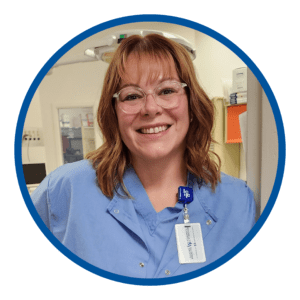
By Alyssa Curry, Surgery Manager
If there’s one test people tend to put off, it’s a colonoscopy. I get it — it’s not exactly dinner-table conversation, and the idea of the procedure can feel intimidating and, quite frankly, awkward. But as someone who works in this arena every day, I want to reassure you: colonoscopies are simple, safe, and incredibly important.
Most importantly, they save lives.
Why screening matters
Colonoscopies are one of the most effective tools we have to detect colon cancer early — and in many cases, to prevent it altogether. During a screening, providers can find and remove polyps before they ever have the chance to turn into cancer. When colon cancer is caught early, treatment is often more successful and less invasive.
That’s why routine screenings are recommended, even if you feel healthy and have no symptoms.
“But isn’t the procedure hard?”
This is one of the biggest misconceptions I hear — and the honest answer is no, it’s not.
The procedure itself is quick and straightforward. Most patients are surprised by how easy it feels and often tell us afterward, “That wasn’t nearly as bad as I expected.”
In fact, the prep ahead of time is often the part people find most inconvenient — and even that happens from the comfort of your own home. While it’s not anyone’s favorite step, it’s manageable, temporary, and our team provides clear instructions so you know exactly what to expect. By the time you arrive for your procedure, the hardest part is already behind you.
From our team’s perspective
For our surgery staff, a colonoscopy is simply part of everyday care. It’s no different than a mechanic changing oil or a dentist doing a routine cleaning — something we do regularly, efficiently, and with a lot of attention to detail. While we understand it can feel like a big deal for patients, for us it’s a familiar, well-practiced procedure with one clear goal: keeping you healthy and comfortable.
What to expect on the day of your colonoscopy
Here’s a simple walk-through of how the day typically goes:
- Before the procedure: You’ll check in and meet your care team. We’ll review your information, answer any last-minute questions, and make sure you’re comfortable.
- During the procedure: You’ll receive medication to help you relax and sleep comfortably. Most patients don’t remember the procedure at all. The exam itself usually takes less than 30 minutes.
- Afterward: You’ll spend a short time in recovery before heading home the same day. Many patients are back to their normal routine by the next day.
A small step that can make a big difference
Scheduling a colonoscopy may not feel urgent — until it is. Taking this preventive step now can make a life-saving difference later, for you and for the people who love you.
For most people, colon cancer screenings should begin at age 45. Some individuals may need to start earlier due to family history, personal health history, or certain risk factors. That’s why it’s always a good idea to talk with your provider about what’s right for you.
If you’re due for a screening — or if you’ve been putting it off — I encourage you to have the conversation and get it on the calendar. It’s one of the simplest things you can do for your long-term health — and truly, it’s not as scary as it sounds.